
What is bakhoor? The essence of the Arabic perfumery art
The world of Arabic perfumery is vast, refined, and deeply connected to the cultural identity of North Africa and the Middle East. One of the most prominent, ancient, and highly valued components of this aromatic universe is bakhoor —a simple term, yet brimming with olfactory beauty, ritual, and history .
Bakhoor is not just an aromatic product; it's also a cultural, sensory, and emotional experience. It's used as a symbol of good taste and hospitality, but also to scent spiritual spaces, celebrations, clothing, and homes. In many Arab households, offering bakhoor to visitors is an act of cordiality and respect.
This article analyzes what bakhoor is, its manufacturing process, its history, its relevance in Arabic perfumery and how to use it properly; it also clarifies its distinctions with respect to oud, dukhoon and other traditional components.
I- What exactly is a bakhoor?
Bakhoor, in its simplest definition, is the term used to refer to wood chips, usually oud or agarwood, infused with aromatic oils, resins, spices, and floral extracts. These chips are burned over charcoal or in an electric burner to release aromatic smoke.
This smoke is not just a simple room fragrance; it is thick, long-lasting, enveloping, and symbolic. It permeates hair, clothing, and fabrics, leaving a warm and sensual scent that lasts for hours or even days.
Bakhoor can mix components such as:
- Arabian rose
- sandalwood
- musk
- Amber
- patchouli
- vanilla
- frankincense
- spices like cardamom or cloves
Each blend is unique and is usually made according to family recipes or those of traditional perfume houses.
II- Difference between bakhoor and oud
Both concepts are clearly different products, although they are often confused.
- Oud:
It is wood in its purest form. It comes from the Aquilaria tree and contains natural resin. When burned, it emits a deep, dark, animalistic, and highly prized aroma.
- Bakhoor:
It's a combination of wood chips infused with extra oils and essences. The aroma depends on the blend used. It can be floral, sweet, amber, spicy, or even fruity.
- In simple terms :
- Oud is a pure and highly prestigious wood, but also very expensive.
- Bakhour is a type of perfumery characterized by being artisanal, affordable, and creative.
III- A Millennial Cultural Legacy
The practice of using bakhoor has roots that predate Islam. Nomadic tribes and ancient Arab civilizations already employed the burning of aromatic woods in their ceremonies of hygiene, beauty, spirituality, and cordiality.
Over time, using bakhoor became a daily practice. It is common to light bakhoor in countries such as Kuwait, Oman, Yemen, Bahrain, Qatar, the United Arab Emirates, and Saudi Arabia .
- before visitors arrive
- after cleaning the house
- at parties and weddings
- during the course of the prayer
- to scent hair and clothes
Today, it is part of Arab cultural identity, just like Arabic coffee or Nabati poetry.
IV- How is the bakhoor manufactured?
The traditional process, although each perfume house has its own secret, consists of:
1 - Choice of wood
Generally, light wood or medium-quality oud chips are used, because high-end ones are reserved for pure burning.
2 - Preparation of the aromatic mixture
A mixture of:
- essential oils (sandalwood, jasmine, rose…)
- Resins (such as copal, benzoin, and amber)
- musk
- molasses or sugar to stabilize
- spices according to style
3 - Maceration
The mixture penetrates the wood completely. It needs to rest for weeks, or even months.
4 - Dry
Once the oils have been absorbed, they are allowed to dry to obtain aromatic pieces ready for burning.
The result is a product that is complex, intense, and long-lasting.
V- How is the bakhoor used correctly?
It's easy to use, but to enjoy it with elegance and safety, you need technique.
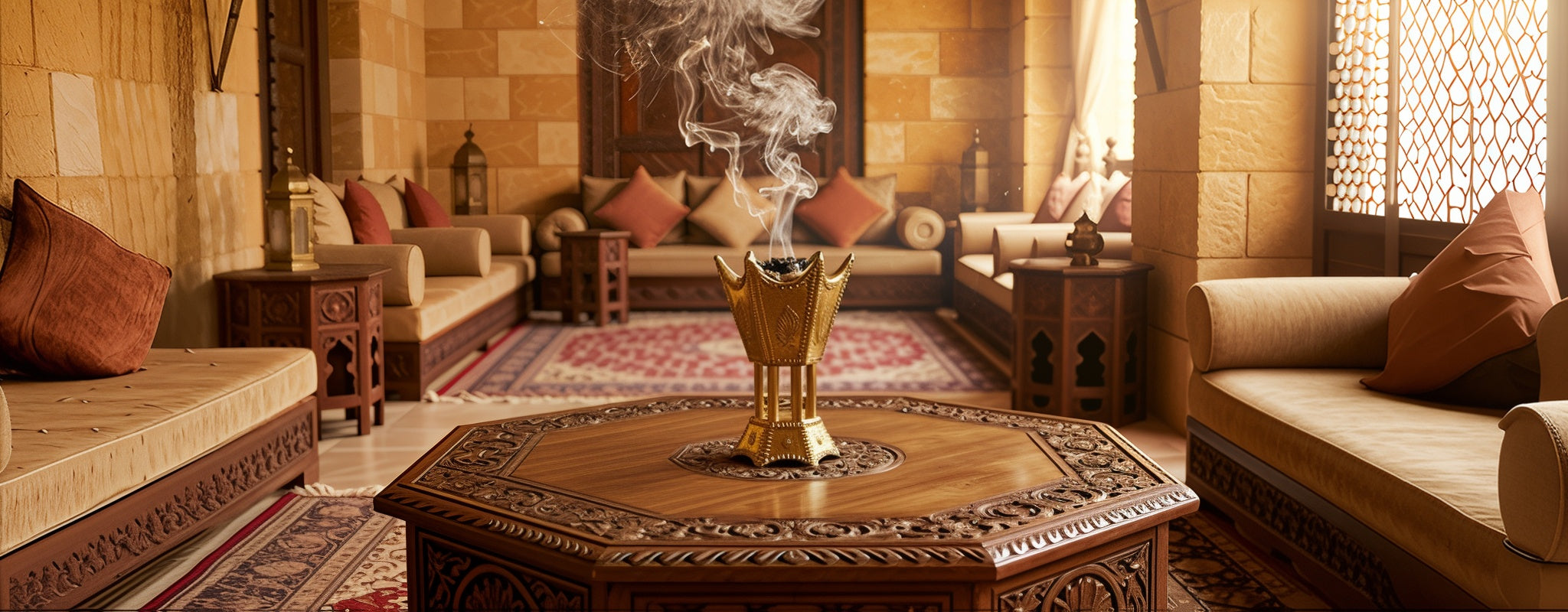
Traditional method: charcoal, also known as mabkhara
- Light a special charcoal for incense.
- Put it inside a mabkhara (Arabic incense burner).
- Place a small piece of bakhoor on top.
- It allows the smoke to scent the place.
Contemporary method: electricity burner
More organized and cleaner:
- Place the bakhoor on the surface of the metal.
- It regulates the temperature.
- Wait for its aroma to spread without producing flames.
To scent clothing
Place the garments over the smoke for a few seconds. They will become infused with a long-lasting, luxurious fragrance.
For hair
Do it with caution and at a distance.
In the Middle East region, this custom is very common among women.
VI- Types of bakhoor
There are different styles depending on the country or tradition:
- Bakhoor khaleeji (from the Gulf):
- Sweet
- Intense
- Very ambery and musky
- Yemeni Bakhoor:
- Traditional
- More woody
- Old recipes
- Moroccan Bakhoor:
- Lighter
- Floral and spicy influences
- Dukhoon:
- A softer, more pasty variant of bakhoor
VII- Benefits of the bakhoor
In addition to its fragrance properties, it is also credited with:
✔ Relaxing aromatherapy
The smoke has a calming and warming effect.
✔ Feeling of cleanliness
It deeply perfumes textiles and spaces.
✔ Welcoming atmosphere
Ideal for receiving guests or creating an intimate atmosphere.
✔ Cultural connection
Its use conveys elegance and tradition.
VIII- Is bakhoor harmful? Safety and recommendations
Like any smoke, it should be used in moderation.
Tips:
- ventilate the area afterwards
- Do not incinerate large volumes
- Use burners that are safe.
- Keep away from pets or children.
The modern electric bakhoor significantly reduces risks.
IX- Bakhoor in modern Arabic perfumery
Today, its impact is so powerful that numerous international perfume houses develop perfumes inspired by the combinations of bakhoor:
- Clean warehouses
- oriental flowers
- warm musks
- resinous woods
It is a link between modern perfumery and tradition.
X- What differentiates bakhoor from other Arabic aromatic elements?
To avoid confusion:
✔ Oud (pure wood)
More expensive, animalistic, deep, resinous aroma.
✔ Bakhoor (mixture)
Sweeter, more floral, spicy, versatile.
✔ Dukhoon
Bakhoor, a pasty substance with a milder aroma.
✔ Attar o mukhalat
Perfumes in oil, they don't burn
XI- How to choose a good bakhoor?
It depends on your style:
- If you like florals:
Look for bakhoor with rose, jasmine, or lily.
- If you prefer something sweet:
Aromas with vanilla, amber, sugar or honey.
- If you like woody textures:
Dry woods, light oud, patchouli.
- If you want something fresh:
Mild and spiced Moroccan Bakhoor
XII- Frequently Asked Questions
Q1: Is bakhoor the same as incense?
- No. Although both are burned to scent spaces, bakhoor is more complex, made with fragrant blends and aromatic woods. Incense is usually more straightforward and less intense.
Q2: Does bakhoor stain clothes?
- No, as long as it's used correctly. The smoke perfumes fabrics without leaving visible residue. It's recommended to keep the garment a certain distance from the smoke.
Q3: Can I use Bakhoor if I have pets?
- Yes, but in moderation. As with any aromatic smoke, it's advisable to ventilate the space well and prevent the animal from being too close to the burner.
Q4: Is bakhoor safe for sensitive people?
- People with respiratory allergies should use it with caution. It is advisable to opt for electric burners, which generate less direct smoke.
P5: How long does the smell of bakhoor last in the house?
- Depending on the mixture, from 4 to 24 hours, and even longer if it is impregnated into curtains, carpets and textiles.
Q6: Can bakhoor be used daily?
- Yes. In Arab countries it is perfectly normal to use it every day, especially after cleaning the house.
P7: What is the best time to use bakhoor?
- after cleaning the house
- when receiving guests
- before events
- in moments of relaxation
- after showering to perfume clothes and hair
Q8: What is the difference between natural bakhoor and commercial bakhoor?
- Traditional bakhoor uses handcrafted recipes with pure oils and natural resins. Commercial bakhoor often includes synthetic fragrances and is more affordable. Both work well, but the handcrafted version is richer and more complex.
Q9: What fragrances go well with bakhoor?
- Amber, musky, or floral Arabian perfumes blend beautifully. The smoke creates a warm and sensual base.
Q10: How to store bakhoor to make it last longer?
- Store in airtight containers, away from light and heat. If stored properly, it can retain its aroma for years.
XIII- Conclusion
The bakhoor is much more than an aromatic item; it is an art, a tradition, and a significant symbol of Arab culture. Its fragrant smoke accompanies everything from moments of personal tranquility to celebrations, upholding a legacy that has endured for centuries.
Bakhoor is a fundamental component of modern Arabic perfumery, representing elegance, luxury, spirituality, and hospitality. Understanding it is to grasp a significant aspect of the aromatic soul of the East.
Its correct use transforms environments, spaces and clothing, generating sensations that cannot be reproduced by any modern air freshener.


Leave a comment
This site is protected by hCaptcha and the hCaptcha Privacy Policy and Terms of Service apply.