
Oud, amber and musk as the pillars of fragrance collecting | Official distributors of Arabian perfumes
In Arabic perfumery, it is not about collecting bottles. It involves knowing materials, weights, and intention. Anyone can go to a perfumery and buy what is in fashion or what has gone viral, but a collector creates a collection with foundations that give it depth, coherence, and longevity.
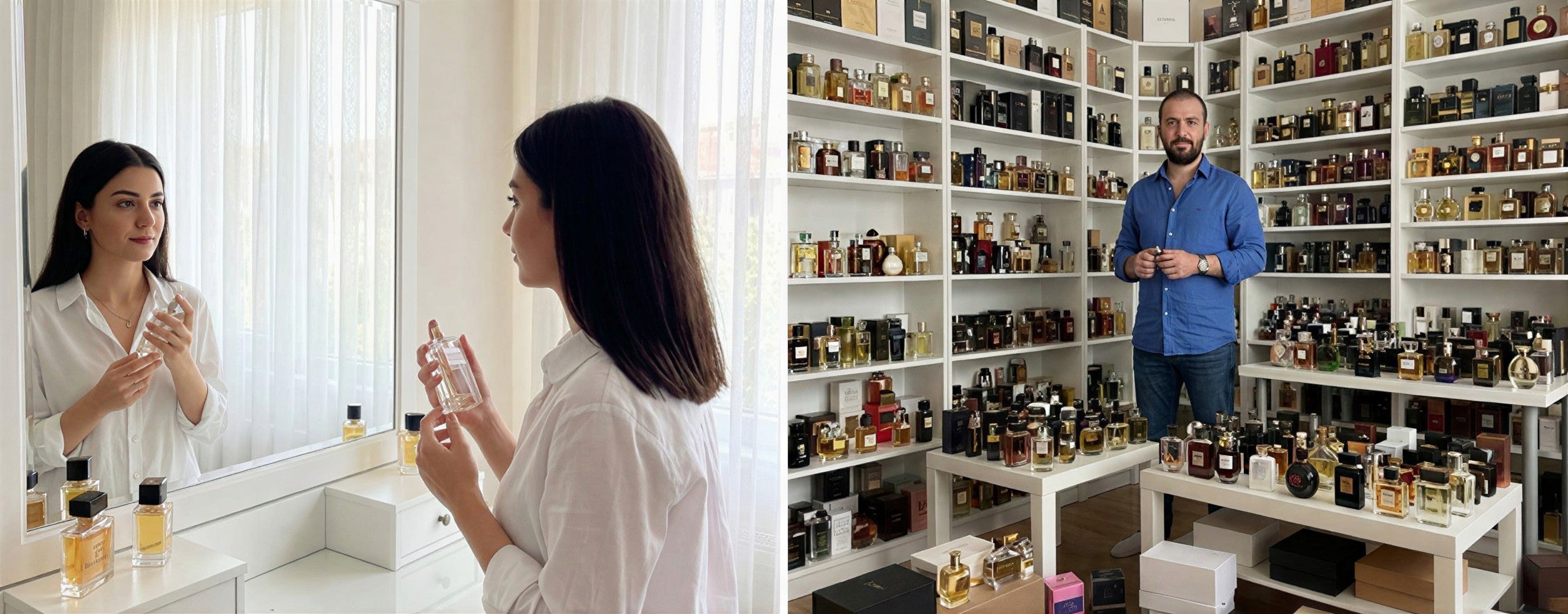
At OrientFragance, this is seen every day. Many people initially look for strong or long-lasting perfumes, but then their questions change. They become interested in raw materials, evolution on the skin, aging, and authenticity. That change defines the transition from buyer to collector.
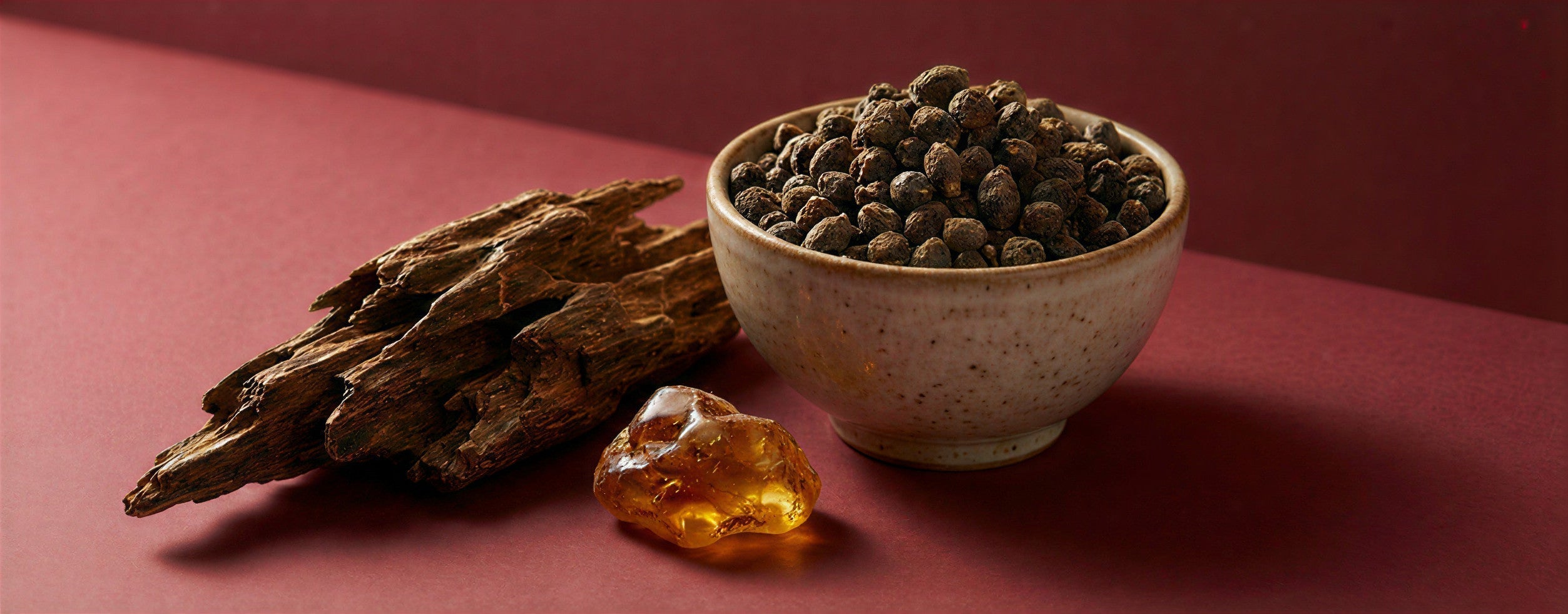
In Arabic perfumery, there are three ingredients that stand out above the rest: oud, amber, and musk. They are not trends or fads. They are the backbone of Arabic perfumery, centuries of history, ritual, and self-expression.
In this article, we tell you why oud, amber, and musk are the three great pillars of collecting, how each one works individually, how they complement each other, and how a collector should approach them.
I- What is a "pillar" in Arabic perfumery?
A classic of the collection is not a classic simply because it is popular. It must meet certain essential requirements.
A pillar of Arabic perfumery ages well, evolves over time, and remains relevant for years. It must come in multiple forms, such as oils and spray perfumes, be able to be mixed with other fragrances, and have a strong emotional value.
Oud, amber, musk... Other notes such as rose, saffron, leather, or incense are relevant, but they orbit around these three. They may contain them, but without these foundations, it will be superficial.
II- Oud as the cornerstone of the Arabic collection
1- Why is oud so special?
Oud is not a perfume; it is a raw material with personality, history, and behavior. In Arabic perfumery, oud is presence, identity, heritage. It is the material most associated with ritual, status, and tradition.
Collectors appreciate oud for how unpredictable it is. Two oud perfumes can smell completely different. Oud transforms on every skin, with heat, with the hours. Some soften and enrich over time, others intensify or acquire smokier notes.
A novice asks if an oud smells good. A collector wants to know what type of oud it is, how it matures, and how it behaves when mixed with other materials.
2- Types of oud a collector may find
Over time, collectors identify different styles of oud. There are modern and clean ouds, for everyday use. Others are smoky, evoking traditional bakhoor. The most animalic and wild ouds can be difficult, but they are the most genuine form. There are also sweet ouds, supported by ambers that make them easier.
A mature library generally contains more than one style, even those that are rarely used, but which enrich knowledge.
3- Example of oud and incense for collectors
Swiss Arabian – Incense 01
Swiss Arabian Incense 01 is an interpretation of oud inspired by incense. It does not intend to overwhelm, but rather to create a controlled environment of smoke, woods, and resins. It is a structured, balanced perfume with character.

- Oriental incense profile.
- Woody and resinous depth.
- Good longevity with controlled projection.
- Perfect for collectors who appreciate domesticated oud.
For an enthusiast, Incense 01 is the midpoint between the wildest oud and the most wearable ambers. It pairs well with amber oils and is excellent in cold climates.
III- Amber as the emotional stone of the collection
1- What is amber in Arabic perfumery?
Amber in Arabic perfumery is not a single ingredient. It is a woody composition built around resins, labdanum, balsams, vanilla, and warm woods. Where oud dominates, amber reinforces, warms, and comforts.
Collectors appreciate amber because it stabilizes blends, softens edges, and extends longevity. Many of the best fragrances in a collection are ambery.
2- Differences between Arabic amber and Western amber
Western amber tends to be sweeter and more linear. Arabic amber is richer, resinous, sometimes smoky, and often mixed with musk or incense. This complexity is what makes it a pillar.
3- Example of starring amber
Swiss Arabian – Shaghaf Amber Infusion
Shaghaf Amber Infusion is an unadulterated hymn to amber. From the opening, an enveloping warmth is perceived, developing into a resinous heart with soft and musky notes. Here, amber is not an accompaniment; it is the protagonist.

- Oriental amber aroma.
- Warm, deep, eternal.
- Ideal for cold climates and for the evening.
- Perfect for mixing with oud.
Collectors adore Amber Infusion for being intense without being heavy. It is the cornerstone for understanding amber as a pillar.
IV- Musk as an intimate note
1- Why musk is so important to collectors
Musk does not shout. Its price is privacy. It interacts uniquely with the skin, develops gradually, and often becomes the essence of personalized fragrances.
Musk reinforces longevity, softens transitions, and brings the fragrance closer to the skin. Not to draw attention, but to leave a mark.
2- Types of musk in Arabic perfumery
There are clean white musks, powdery musks, more animalic musks, and ambery musks. Every good repertoire should contain at least one musk for everyday or personal use.
3- Example of amber-musk balance
Khadlaj – Musk Pour Amber
Musk Pour Amber by Khadlaj is warm and intimate. Amber gives it body, and musk stays close to the skin, elegant and very personal.

- Amber and musk notes.
- Soft and personal projection.
- Ideal for everyday use.
- Good interaction with the skin.
It is a chameleon perfume that plays with powerful ouds and deep ambers.
V- How oud, amber, and musk combine
The strength of these pillars manifests when they come together. Each has a purpose. Oud gives presence, amber cohesion, and musk depth.
Collectors rotate through these cornerstones depending on the season. Oud for the evenings, amber for comfort, musk for the day.
VI- Other key expressions for collectors at OrientFragance
Al Absar – Hasaa
Hasaa is classic oriental warmth at its best expression.

- Warm oriental profile
- Moderate projection
- Ideal for day or night.
It is an aroma that always brings stability to a collection.
Al Absar – Muhit
Muhit opens with a fresher note over a woody and musky base.

- Contemporary oriental
- Between freshness and depth.
- Ideal for any season.
Perfect for collectors who want variety without losing Arabic identity.
Al Absar – Maghri
Maghri, It opts for intensity and enigma, with a strong and oriental presence.

- A deep and enduring song.
- Strong personality
- Ideal for the evening.
An alternative for lovers of perfumes with character.
VII- Common mistakes in collecting
Many collectors only focus on oud, overlooking amber and musk. Others accumulate brands without knowing raw materials, or buy blindly without knowing structures. Underrating musk or believing that amber is simple are common mistakes.
A mature library wants to make sense, not to hoard.
VIII- How to create a collection with foundations
You do not need dozens of perfumes. A good foundation could be an oud oil, an amber perfume, an everyday musk, oud and amber, and amber-musk.
Over time, the collector refines their choice instead of expanding it without purpose.
IX- Frequently asked questions
Q1: Is oud necessary in an Arabic collection?
- Yes. Oud is the heart of Arabic perfumery and gives it depth even if it is not used daily.
Q2: Is amber suitable for everyday use?
- Balanced amber fragrances can be used daily, especially in cold climates.
Q3: Why does musk smell different on every individual?
- Musk mixes with the chemistry of the skin, so it is very individual.
Q4: Can a novice start with musk?
- Yes. It is a good way to introduce yourself to the world of oud.
Q5: Do these perfumes age well?
- Oud, amber, and musk tend to age better than light fragrances if stored properly.
X- Conclusion
A collection without oud, amber, and musk is incomplete, but it will never be deep. These materials are not trends; they are the alphabet of Arabic perfumery.
At OrientFragance, we do not only sell perfumes; we advise collectors on building genuine collections. Knowing these foundations turns perfume into something more than a product in memory, into a sign of identity, into a manifestation.
A collector does not keep bottles. They build walls.

Leave a comment
This site is protected by hCaptcha and the hCaptcha Privacy Policy and Terms of Service apply.