
Incense rituals in the Gulf
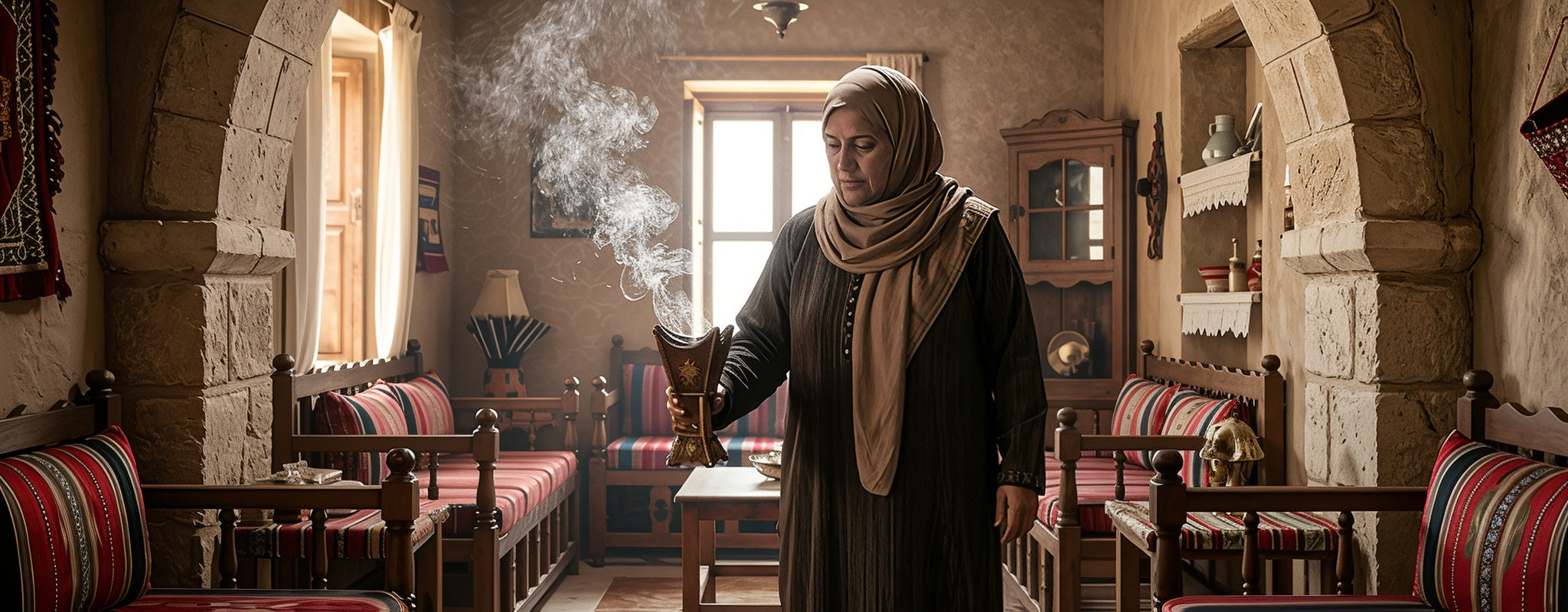
The use of incense is one of the most elaborate and profound cultural rituals found on the Arabian Peninsula. In places like Bahrain, Qatar, Oman, Kuwait, the United Arab Emirates, and Saudi Arabia , burning incense is not merely a way to scent a space; it is a traditional practice with deep aesthetic, social, and spiritual significance.
Over the centuries, Gulf families have developed an art that blends preparation, the selection of fine woods, specific burning methods, and an almost ritualistic choreography. This article examines how incense is used in this region, what it represents, and why it remains so relevant in daily life.
I- The role of incense in Gulf culture
Incense in the Gulf is:
- An emblem of hospitality: offered to guests as a sign of respect.
- A spiritual component: it purifies the home and accompanies situations of a religious nature.
- An expression of luxury: renowned families use rare woods, such as oud (agarwood).
- An identity ritual: it is passed from one generation to another.
In the Gulf, on the other hand, it is a daily occurrence and almost inseparable from domestic life, while in the West it is used occasionally.
II- The most commonly used types of incense in the Gulf
Although each family has its own particular tastes, the most common ones are:
● Oud (agarwood)
The fragrant jewel of the Gulf.
It is burned in small pieces impregnated with natural resins. It is thick, smoky, deep, and luxurious.
● Bakhoor
Wood chips or tablets combined with spices, flowers and oils.
Each household usually has its preferred brand or recipe.
● Amber and floral incense
Less intense, ideal for small rooms or morning activities
III- The ritual of burning incense: step by step
The houses in the Gulf follow a very particular procedure that reflects protocol and tradition.
1 - Activation of carbon
Special charcoal is used for the bakhoor. It is placed in the mabkhara (the burner) when it is red hot.
2 - Use of bakhoor or oud
Small pieces are placed on the charcoal using tweezers.
The quality of the smoke is essential; it must rise slowly, gracefully, and steadily.
3 - Incense throughout the house
The host moves through the rooms with the burner to:
- give clothes a scent
- clean the space
- Prepare the home for guests
4 - The guest ritual
In many families, guests are offered the mabkhara so they can bring the smoke close to their hands and clothes.
It is a gesture of kindness and welcome.
IV- Specific rituals by country
🇸🇦 Saudi Arabia
It is the nation that uses pure oud the most.
It is common for homes in Saudi Arabia to have high-quality Maroke, Cambodian, or Hindi oud.
🇦🇪 United Arab Emirates
Here, the delicate and sweet bakhoor prevails, which is full of roses, amber, and vanilla.
Usually, Emirati families light it before visitors arrive or during special occasions.
🇴🇲 Oman
Birthplace of royal incense or frankincense.
In Dhofar, it is used for purification, natural medicine, and religious ceremonies.
🇶🇦 Qatar
It blends luxury and tradition.
Designer bakhoor is used extensively, in combination with floral and gourmand notes.
🇰🇼 Kuwait
Known for his intense blends and his use of incense at family celebrations
V- Incense at Gulf celebrations and events
Incense is always found in:
- marriages
- family gatherings
- births
- relevant visits
- religious events
For example, at weddings, more powerful and expensive versions of these products are used, which leave marks on clothing for several hours.
VI- Incense in high Arab perfumery
The ritual of incense has become an art form thanks to the Gulf perfume industry.
Today, many perfume houses create perfumes inspired by oud, bakhoor, and traditional combinations burned at home.
These fragrances are distinguished by:
- high resistance
- Notes of spice, resin, and wood
- a warm and enveloping atmosphere
VII- Summary table of the main rituals
| Gulf country | Favorite type of incense | most common use |
| Saudi Arabia | Pure oud | Hospitality and luxury |
| United Arab Emirates | Sweet Bakhoor | Visits and events |
| Oman | Royal Frankincense | Spiritual ritual |
| Taste | Bakhoor gourmand | Celebrations |
| Kuwait | Intense blends | Family gatherings |
| Bahrain | Floral Bakhoor | Daily household use |
VIII- Why incense remains popular in the Gulf
Incense remains relevant, despite modernization and technological progress.
It continues to be a symbol of:
- cultural identity
- guest service
- family permanence
- spiritual bond
It is an art that develops, but never ceases to exist.
IX- Conclusion
Incense rituals in the Gulf are more than just a scent; they are a manifestation of beauty, tradition, and hospitality. Each country has a unique style, representing centuries of history, ranging from the pure Saudi oud to the frankincense of Oman.
This aromatic legacy remains alive in contemporary perfumery, as well as in homes and festivities, which shows that incense is one of the most precious treasures of Arab culture.

Leave a comment
This site is protected by hCaptcha and the hCaptcha Privacy Policy and Terms of Service apply.